Services

Classification

Classification groups image pixels into classes based on spectral and spatial traits. Valuable data, like land cover and features, are extracted from satellite images for mapping.

Get in contact

Satellite image classification: Revealing Earth's features through pixel categorisation

Classification refers to the process of categorising or grouping pixels within an image into distinct classes or categories based on their spectral characteristics and spatial patterns. This technique is commonly used to extract valuable information from satellite images, such as land cover, land use, natural features, and human-made structures.

Satellite imagery classification involves assigning each pixel in an image to a specific class, such as water bodies, forests, urban areas, agricultural fields, and more. This helps in creating thematic maps that provide insights into various aspects of the Earth's surface and its changes over time.
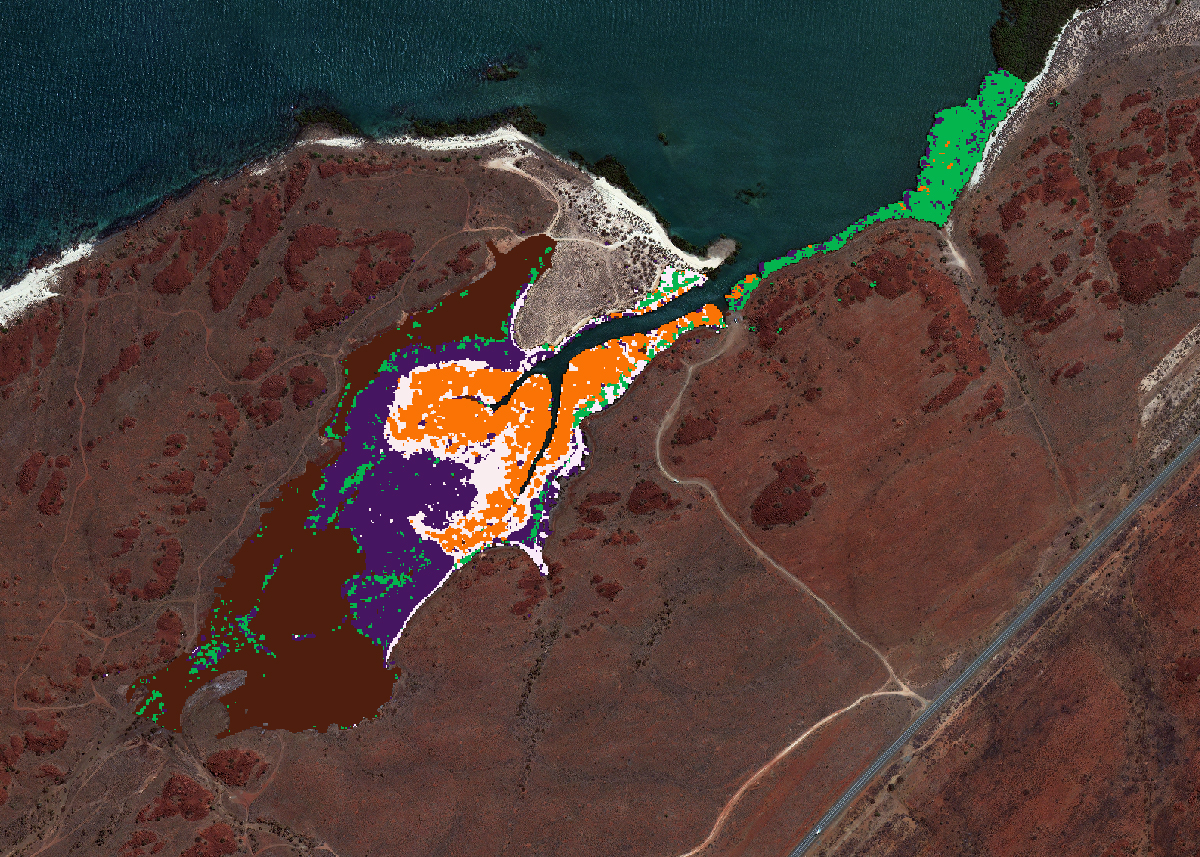
Classification example
WA Mangrove Classification
Magnified View

This image is interactive. To use, select classification via the key and use the slider/magnifier to compare.

Mangrove Classification Key

Precision Mapping for Coastal Ecosystems

Our mangrove classification solutions turn satellite imagery into actionable insights, empowering you to monitor, manage, and protect coastal ecosystems with unmatched accuracy. By categorising pixels based on spectral and spatial characteristics, we can map dense and sparse mangrove areas, mudflats, and transitional zones, critical data for conservation, restoration, and climate impact projects.

The example provided, captured using WorldView Legion (Satellite 2) 8-band, 2-metre multispectral data, illustrates the level of detail and precision our analysis can achieve. Our capabilities extend across multiple satellite platforms and resolutions, delivering high-resolution mangrove maps for diverse regions. These insights enable stakeholders to monitor ecosystem health, detect changes over time, and make data-driven decisions for environmental management, restoration planning, and coastal risk mitigation.

Learn more about our classification projects

Read our detailed case study of WA mangroves at Burrup to understand how these insights inform conservation and management strategies.

Read Case Study

Vegetation Mapping for Classification

Using Sentinel-2 multispectral imagery, we deliver high-accuracy vegetation classification across large geographic areas. By leveraging spectral bands including Near-Infrared (NIR),Red-Edge, and our cutting edge machine algorthims, we distinguish between forest density, regrowth areas, plantation forestry, cleared land, bushfires and transitional vegetation zones.

Sentinel-2 provides 10-metre resolution multispectral data with frequent revisit times, enabling consistent monitoring of forest health, biomass distribution, and land cover change. Our classification workflows transform raw satellite data into actionable forestry intelligence for environmental monitoring, carbon accounting, biodiversity assessment, and land management planning.

The example demonstrates how natural colour imagery can be compared with false colour composites and automated vegetation classification layers, highlighting canopy structure, vegetation vigour, and spatial patterns across inland forest landscapes.

Sentinel-2 Inland Forestry
Sentinel-2 Vegetation Classification
Magnified View
Vegetation Classification Layers
Machine Learning

Machine Learning

At Geoimage, we use Machine Learning (ML) to classify features within imagery. We are adept as using both pixel-based and object-based ML approaches understanding the benefits and limitations of those methods. With years of experience, our team can ensure the most accurate classification results are achieved and we are constantly refining and improving our methods. We also know that ML will not provide 100% accuracy which is why we include human quality control as part of our overall process.

Machine Learning allows us to create dynamic models that can automatically detect mangrove species and other ecosystem features with high precision. These models are trained on ground-truth data and continuously improved to reflect seasonal and environmental changes.

Revealing insights and informing decisions

Geoimage's solutions have the capability to analyse and interpret satellite images for a diverse array of uses, which encompass:

Icon representing land cover mapping
Land cover mapping

Classification can be used to generate accurate maps depicting different land cover types, such as forests, grasslands, and urban areas. These maps can be useful for environmental monitoring, resource management, and urban planning.

Icon representing agricultural monitoring and crop assessment
Agricultural

Classification helps in assessing crop health, identifying crop types, and monitoring changes. This information can aid in optimising farming practices and predicting yields.

Icon representing natural resource management
Natural resource management

It can be used to monitor changes in natural resources like forests, water bodies, and minerals, supporting conservation and sustainable management efforts.

Icon representing disaster management and damage assessment
Disaster management

Classification can help in assessing the extent of damage caused by natural disasters, such as floods and bushfires, enabling rapid response and recovery efforts.

Icon representing infrastructure planning and analysis
Infrastructure

Satellite imagery classification can contribute to planning transportation networks, locating potential sites for infrastructure projects, and analysing transportation patterns.

Icon representing environmental monitoring
Environmental monitoring

Classification assists in monitoring environmental changes, such as deforestation, urban encroachment, and pollution levels, providing valuable data for policy-making and enforcement.